Payments in Colombia
Payment gateway in Colombia
Boldrails is a licensed payment gateway provider that lets businesses accept cards, PSE, NEQUI and Efecty in Colombia through one integration. We acquire and settle directly, and we run mass payouts to third parties. We serve high-volume and high-risk merchants, with onboarding in 3 to 14 days.
- Cards, PSE, NEQUI, Efecty
- We acquire and we settle
- Onboarding in 3 to 14 days
- Licences held where we serve
Onboarding takes 3 to 14 days, depending on your case.
Last updated: 28 August 2026
The basics
What is a payment gateway in Colombia?
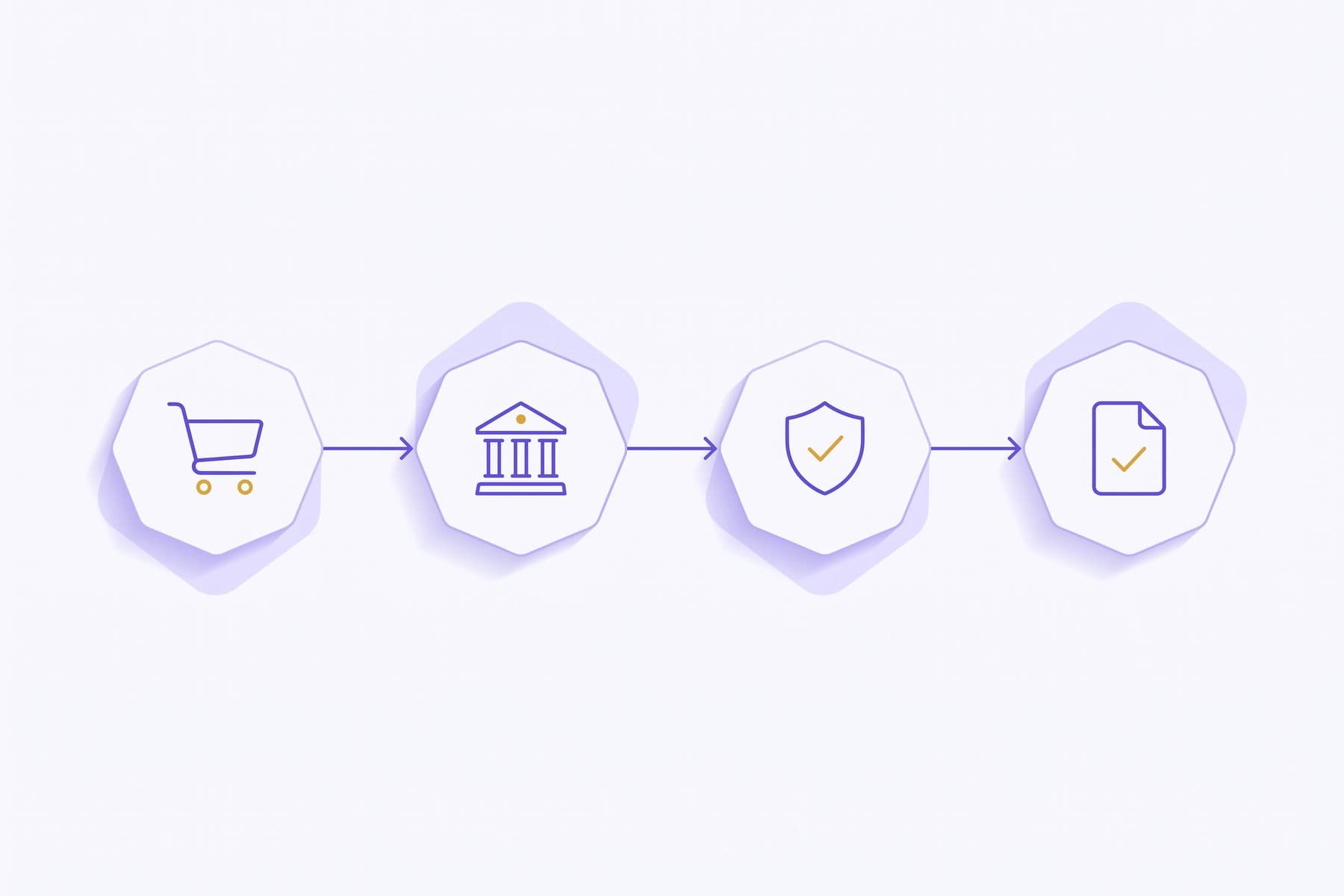
A payment gateway in Colombia takes a customer's payment at checkout, authorises it with the bank or the card network, and moves the money to your account. The part most pages skip is who holds that money in between. Boldrails acquires and settles directly, so your funds sit inside the contract you signed with us, not with a company you never signed with.
Colombian merchants shop for this as a pasarela de pagos. The same phrase gets used for consumer bill-pay portals, where a person pays a fine or a utility bill. This page is about the other job: a business taking money from its own customers, online, at scale.
A pasarela de pagos and a procesador de pagos are also not the same product, and the market says so out loud. Wompi's own explainer tells readers the two are completely different and not interchangeable. The gateway is what your checkout talks to. The processor carries the authorisation message between the acquiring side and the buyer's bank. We provide the acceptance side and the settlement that follows it.

Local methods
Payment methods we provide in Colombia
We provide four payment methods in Colombia on one integration: cards, PSE, NEQUI and Efecty. Between them they cover card holders, bank account holders, wallet users and cash buyers.
| Method | Type | What the buyer needs |
|---|---|---|
| Cards | Visa, Mastercard, Amex, Diners and Codensa | Card details, plus 3DS where the issuer asks for it |
| PSE | Bank debit, operated by ACH Colombia | A savings, current or electronic deposit account |
| NEQUI | Wallet | A NEQUI account |
| Efecty | Cash network | Cash at an agent point |
Cash still moves real volume in Colombia, so Efecty carries the same weight in our set as the other three. Settlement lands in Colombian pesos.
Four methods is a chosen set, not the longest one on the market. ePayco advertises more than 22 payment methods and a wider cash network than ours. What we add is the settlement and payout side of the same balance, plus acceptance for businesses other providers turn down.
Bank debit
How PSE works and how long it takes
PSE is not a payment gateway, though searchers keep asking whether it is. It is a bank debit service operated by ACH Colombia. Your buyer picks their bank at checkout, approves the debit inside their own bank session, then comes back to your order page.
PSE's own FAQ states a maximum processing time of 21 minutes, and says PSE costs the payer nothing (pse.com.co, extracted 6 August 2026). Twenty one minutes is a ceiling. Build your order flow around it anyway. Do not mark an order paid on the redirect. Wait for the confirmation, and we send you one.
The same FAQ lists what PSE can debit: savings accounts, current accounts and electronic deposit accounts. A buyer without one of those cannot pay this way. That is the practical reason cards, NEQUI and Efecty sit next to PSE on the checkout rather than behind it.
Source
Payouts
Dispersions and third-party payouts in Colombia
Taking money in and paying money out are two different jobs. Dispersion, or dispersión de fondos, is the second one: sending funds from your balance to many third parties at once, whether that is sellers, couriers, affiliates or staff.
We disburse. You send one file or one API call, we pay the list, and one reconciliation comes back. Payouts run from the same balance you accept into, so you are not moving money into a separate treasury first and reconciling twice.
Dispersion carries its own fee line. Wompi advertises having no dispersion fee at all, which tells you the line exists everywhere else. Ask any provider two questions: is dispersion charged per payout or folded into the transaction rate, and does a payout run cost the same on day 30 as it did on day 1. Our own price and limits are confirmed at onboarding.
NEQUI acceptance is covered above. Wallet-level payout detail, including NEQUI dispersions, sits on our mobile money page, and higher-volume runs sit on mass payouts.
Funds custody
Acquirer, aggregator or payment initiator: who holds your money
Researched and reviewed by: Claude Igrow, Payments Specialist
Three Colombian providers describe fund custody three different ways. Wompi's explainer says the aggregator model sends money straight to your bank while the gateway model sends it to the pasarela first. ePayco calls itself an all in one aggregator and accrues your balance in an ePayco account. Zona Pagos says it never collects your money at all. None of the three cites the rule that decides it.
Decreto 1297 de 2022 decides it. The decree rewrote the definitions in Decreto 2555 de 2010 and separated three roles.
| Role | Holds the payer's funds? | Credits the merchant? | Owns chargeback adjustments? | Who may perform it |
|---|---|---|---|---|
| Acquirer (adquirente) | Yes, in the flow | Yes, the merchant or the aggregator, on agreed terms | Yes, and answers to the payment system for them | Credit institutions, SEDPEs, and companies not supervised by the SFC |
| Aggregator (agregador) | May be credited instead of the merchant | Yes, onward to the merchant | No, the acquirer stays responsible | A separate contracting party; the merchant's contract may be with either |
| Payment initiator (iniciador de pagos) | No, may never take possession of the payer's funds | No | No | Routed through an EASPBV, with the payer's prior authorisation |
Every cell is taken from Decreto 1297 de 2022. Nothing here is inferred from provider marketing. The rule that a payment initiator may never take possession of the payer's funds is quoted directly from article 2.17.4.1.1 of that decree, and is stated on the authority of the decree itself rather than as settled market consensus.
The decree lists four responsibilities under adquirencia: signing merchants up to the low-value payment system, supplying the access technology, processing the payment orders, and crediting the merchant or the aggregator while handling the adjustments that come out of disputes, returns, claims and chargebacks. Whoever performs them answers to the payment system for all four.
Boldrails acquires and settles. Your contract is with us, and the money we credit you is the money we accepted.
Two caveats. Decreto 1297 lets acquiring be performed by credit institutions, by SEDPEs, and by companies the Superintendencia Financiera de Colombia does not supervise, so the supervision question has three lawful answers in this market and it is worth asking which one applies. And the aggregator model is legitimate under the same decree. ePayco runs it openly. The question is not whether it is allowed. It is whether you know whose account your money sits in before it reaches yours.
Primary source
Declined elsewhere, or told your vertical is too risky? We underwrite the business, not the category. Tell us your rails and your volume.
Regulation
Who regulates payments in Colombia
Low-value payment systems, which is where card, PSE and wallet payments sit, are regulated under Decreto 2555 de 2010 as amended by Decreto 1692 de 2020.
Supervision there is conditional, not automatic. Under article 325 of the Estatuto Orgánico del Sistema Financiero, companies that administer card systems or payment and clearing systems may be placed under the inspection and supervision of the Superintendencia Financiera de Colombia when the National Government provides for it by general rule. The SFC is the regulator to check a provider's claim against.
Colombia also has a dedicated licence class for firms whose business is holding electronic deposits and moving payments. Ley 1735 de 2014 created the sociedad especializada en depósitos y pagos electrónicos, the SEDPE. A SEDPE may never lend, has to keep the money it captures in demand deposits at SFC-supervised entities, and its deposits are covered by FOGAFIN deposit insurance. That is deposit insurance, not the safeguarding arrangement European e-money firms use, and the two get confused often. Which licence any particular wallet holds is a question for that wallet's own disclosures. We have not checked the register.
BRE-B is Banco de la República's interoperable instant payment system. Users register a llave, which can be a phone number, an identity document, an email address or an alphanumeric code, and transfers reach any participating institution. Banco de la República's own technical documentation caps an instant transfer at 1,000 UVB. It appears here as market context. It is not one of the methods we provide.
Boldrails is a licensed principal provider. We hold the necessary licences required in the markets we serve. Nothing in this section describes a Boldrails licence position in Colombia.
Primary sources

Build and price
Integration, settlement and costs
One integration carries all four methods. You get a hosted checkout, a payment API for your own front end, webhooks for confirmations, and a payout API for dispersions. Developers looking for the nequi api will find that call in the same API as the rest, on the same keys. Card data runs on PCI DSS controls, so your own scope stays as small as your integration choice allows.
Pricing is where this market goes quiet. Bold publishes no rate at all. ePayco's published figure carries an antes label, which makes it a price they have since moved off. togrowagencia and enviame.io publish different rates for the same PayU tier. So compare the structure instead of the headline.
| Fee line | What it covers | Where providers differ |
|---|---|---|
| Transaction rate | The percentage plus fixed amount charged on each accepted payment | |
| Settlement | Moving accepted funds to your account | |
| Dispersion | Paying out to third parties | |
| Chargeback handling | Disputes, returns and claims |
Headline percentages are not comparable across providers, because the lines underneath them differ. A lower rate quoted before IVA, with a fee on every withdrawal, can cost more per month than a higher one that includes both.
We quote against your method mix, your volume and your business profile, and your price and limits are confirmed at onboarding. Onboarding takes 3 to 14 days, depending on your case.

FAQ
Colombia payment gateway questions
Last updated: 28 August 2026