Nigeria
Payment gateway for Nigeria
Boldrails is a licensed payment gateway provider that lets businesses accept payments in Nigeria: cards, bank transfers, USSD and crypto, through one API, with NGN and USD payouts and settlement in fiat or crypto. We serve high-risk and high-volume merchants, including forex, crypto and e-commerce, that local processors often decline.
- Cards, transfers, USSD and crypto
- NGN, USD or crypto settlement
- Collections and mass payouts
- Built for high-risk verticals
Approval in 3 to 14 days, depending on your case · one contract, one integration, one provider
How to start
How to accept payments in Nigeria
To accept payments in Nigeria, you register your business with the CAC, apply to a licensed gateway, complete KYB, then collect by card, bank transfer, USSD, mobile money or crypto and settle in NGN, USD or crypto. Boldrails provides this gateway directly as a licensed principal. We hold the licences and run the whole flow, so you deal with one provider, not a chain of them.
Here is how a Nigerian business goes live with us:
- 1
Register your business with the CAC and apply through Boldrails.
- 2
Complete KYB so we can issue your live keys.
- 3
Get your API keys, or generate a no-code payment link.
- 4
Test the full flow in our sandbox.
- 5
Go live and settle in NGN, USD or crypto.
A CAC business registration is needed for live API keys and full settlements. In Nigeria, payment gateways operate under Central Bank of Nigeria (CBN) payment-service-provider licensing. The categories include Switching and Processing, PSSP and PTSP. Want to check any provider yourself? Look it up on the CBN Payment Service Providers register.
Methods & pricing
Local payment methods in Nigeria
Nigerian customers pay with the methods they already trust. We take all of them through one integration, then settle the funds to you.
| Method | What it is | Settles as |
|---|---|---|
| Cards (Visa, Mastercard, Verve) | Local and international card payments, including the Verve scheme | Fiat or crypto |
| Bank transfer / Pay with Transfer | Direct transfer over the NIBSS instant-payment rail (NIP) | Fiat |
| Dynamic virtual accounts | A unique account number per transaction | Fiat |
| USSD | Phone-keypad payments, no internet needed | Fiat |
| Mobile money (OPay, PalmPay) | Wallet payments from popular Nigerian wallets | Fiat |
| QR codes | Scan-to-pay at checkout | Fiat |
| Crypto | Stablecoin and crypto collections | Crypto or fiat |
Per TC Insights' Nigerian Payments Report 2024 and 2026 data from PhotonPay, Nigerian shoppers reach for bank transfer, USSD and Verve before they reach for an international card. Miss those methods at checkout and you lose the sale. Offer all of them and more carts clear.
For context, here is public provider pricing in Nigeria, by source:
- Paystack: 1.5% + ₦100 on local transactions (PhotonPay and Kora, June 2026).
- Flutterwave: about 1.4% base on local (PhotonPay); Kora reports 2% all-in, which includes a 0.6% platform fee, so the figures differ by what they bundle.
- Monnify: 1.5% on bank transfers, capped at ₦2,000 (Kora and monnify.com, June 2026).
Check each rate on the provider's own pricing page before you bank on it. Our pricing works differently. We quote you: send us your volumes and we price your rate through Get started, so there is no published flat MDR. And every card transaction we handle runs on PCI DSS controls.
Settlement & payouts
Payouts and settlement in NGN
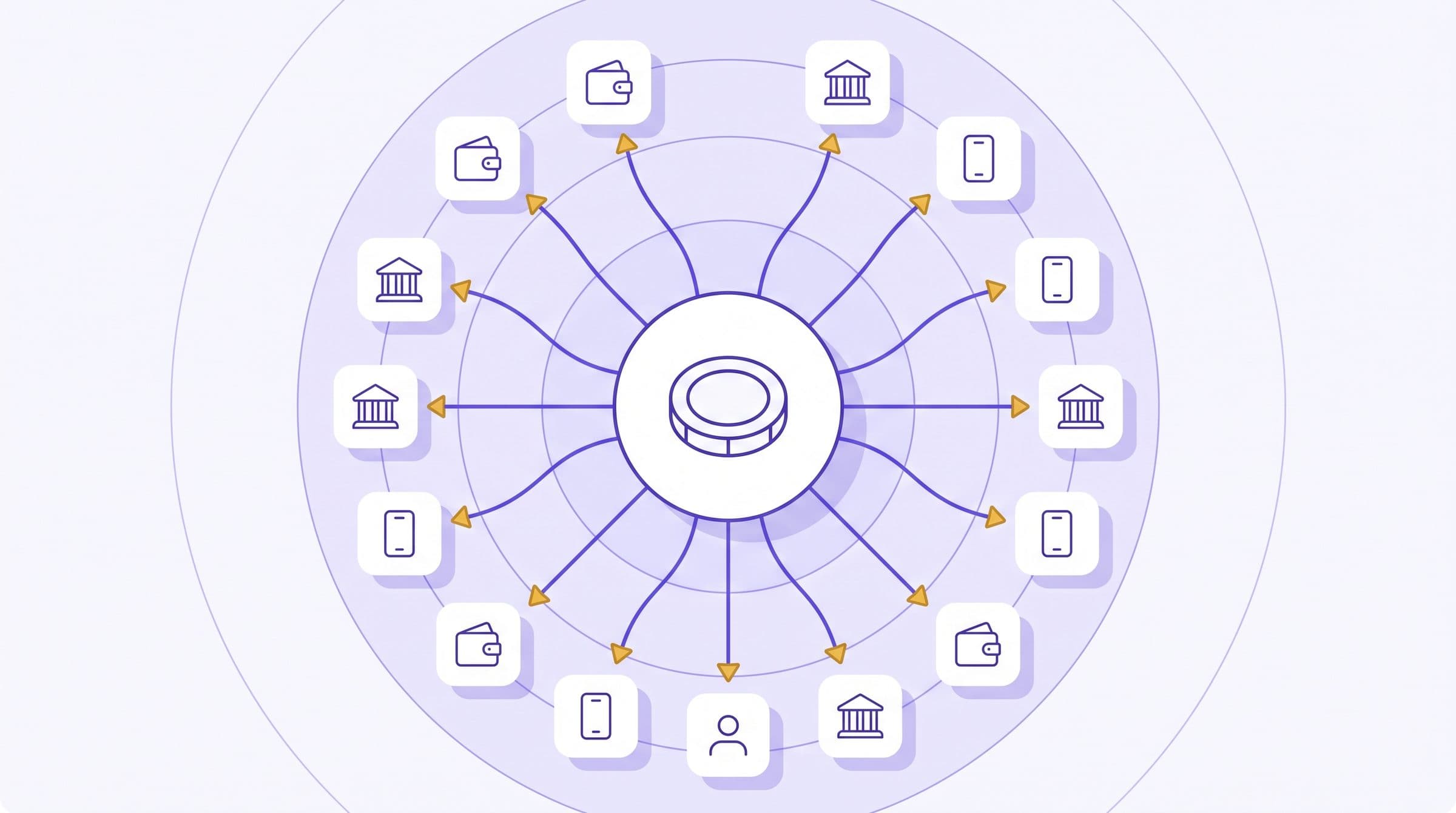
We settle in NGN and USD, and we disburse at scale. One engine handles both sides. Money comes in through collections; money goes out through mass payouts, to many recipients in a single call. Most Nigerian processors focus on collecting. For mass payouts at scale, options narrow fast: the providers that offer them at volume tend to price them separately or quote through sales.
Standard local gateways force-convert international card payments into NGN at whatever rate applies at settlement. With no option to hold USD, you carry the naira's volatility. We settle in multiple currencies and in crypto, so you choose when and at what rate you convert.
Timing depends on the rail. We confirm your schedule during onboarding.
- One platform for collections and mass payouts.
- NGN, USD or crypto settlement.
- Bulk disbursement to suppliers, partners or creators.
Who it's for
Who Boldrails is for in Nigeria
We are built for the businesses other gateways turn away. High-risk and high-volume merchants are our core, not an edge case we tolerate.
Forex and CFD brokers
Crypto businesses and exchanges
E-commerce, SaaS and marketplaces
iGaming and betting operators, where they hold a licence
High-volume platforms processing at scale
The high-risk lane in Nigeria is usually served by third-party specialty providers. We compete there as a licensed principal: we provide collections, settlement and mass payouts directly, including for businesses that local processors decline. We accept verticals at a capability level and confirm the details for your market when you apply.
Compare
How Boldrails compares
Each Nigerian gateway has a strong suit:
- Paystack: developer experience and a local-first product.
- Flutterwave: pan-African breadth.
- Monnify: low-fee bank transfers.
- Interswitch: enterprise integrations and the Verve card network.
- OPay: its mobile wallet.
Boldrails is the choice when you need high-risk acceptance, crypto and fiat settlement, and mass payouts under one licence. We also bring emerging-market rail breadth (M-Pesa, MTN MoMo, QRIS) that Nigeria-only providers do not offer. Been declined or frozen somewhere else? Talk to us.
FAQ
Frequently asked questions
Last updated: August 28, 2026