Crypto OTC, Australia
Crypto OTC in Australia for platforms and treasuries
Boldrails provides a crypto OTC desk for Australian businesses. We convert AUD into USDC and USDT, and convert stablecoins back into AUD settled to an Australian bank account. We fund over PayID, PayTo, Osko, BECS Direct Debit and bank transfer, and pay out over Osko (NPP) and bank transfer. Onboarding takes 3 to 14 days, depending on your case.
- AUD, USD and crypto settlement
- PayID, PayTo, Osko, BECS
- USDC and USDT
- Onboarding in 3 to 14 days
Enquiries from $100k a month.
Last updated: 2026-08-17
For platforms, brokers and payment companies running AUD on-ramp and off-ramp flows for their own customers. Enquiries from $100k a month.
Onboarding takes 3 to 14 days, depending on your case.
On-ramp
How does an Australian business convert AUD into USDC or USDT?
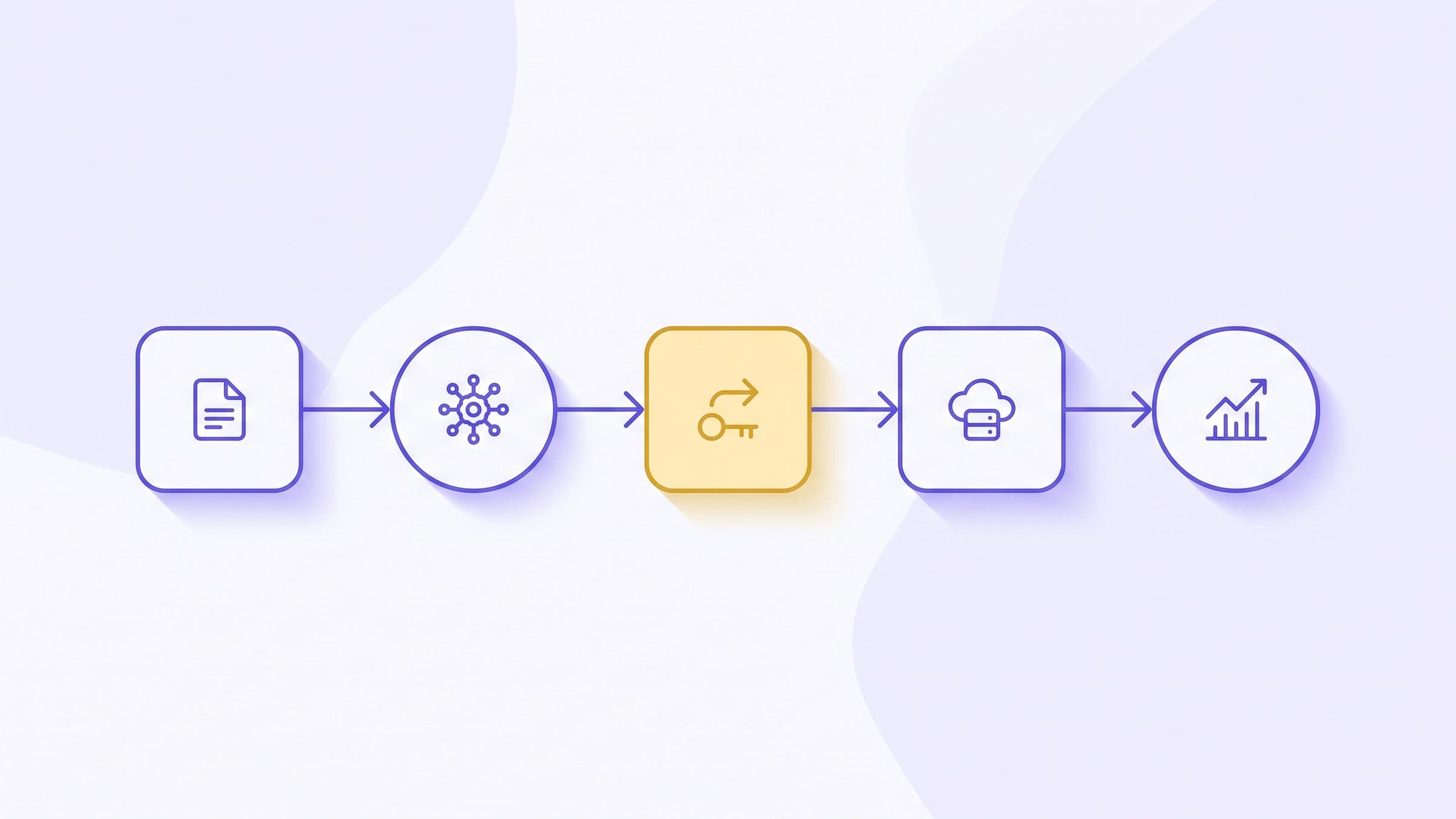
An Australian business funds a Boldrails account in AUD, then receives USDC or USDT in its own wallet. We take the AUD payment, run compliance screening, convert the funds at our desk, and send the stablecoin. The whole path is one on-ramp, run by one provider.
Here is the flow, step by step.
- 1You pick the stablecoin you want, USDC or USDT.
- 2You pick AUD as the funding currency.
- 3You send the AUD payment over PayID, Osko, BECS Direct Debit, a card or a bank transfer.
- 4We receive the payment and reconcile it against your order.
- 5We run KYC, AML and transaction screening.
- 6We convert the AUD through our own OTC liquidity.
- 7We send the USDC or USDT to your wallet.
You deal with one desk across that path on a single contract, so there is one place to ask when a payment needs tracing.
Off-ramp
How can an Australian business convert USDT to AUD and pay out to a bank account?
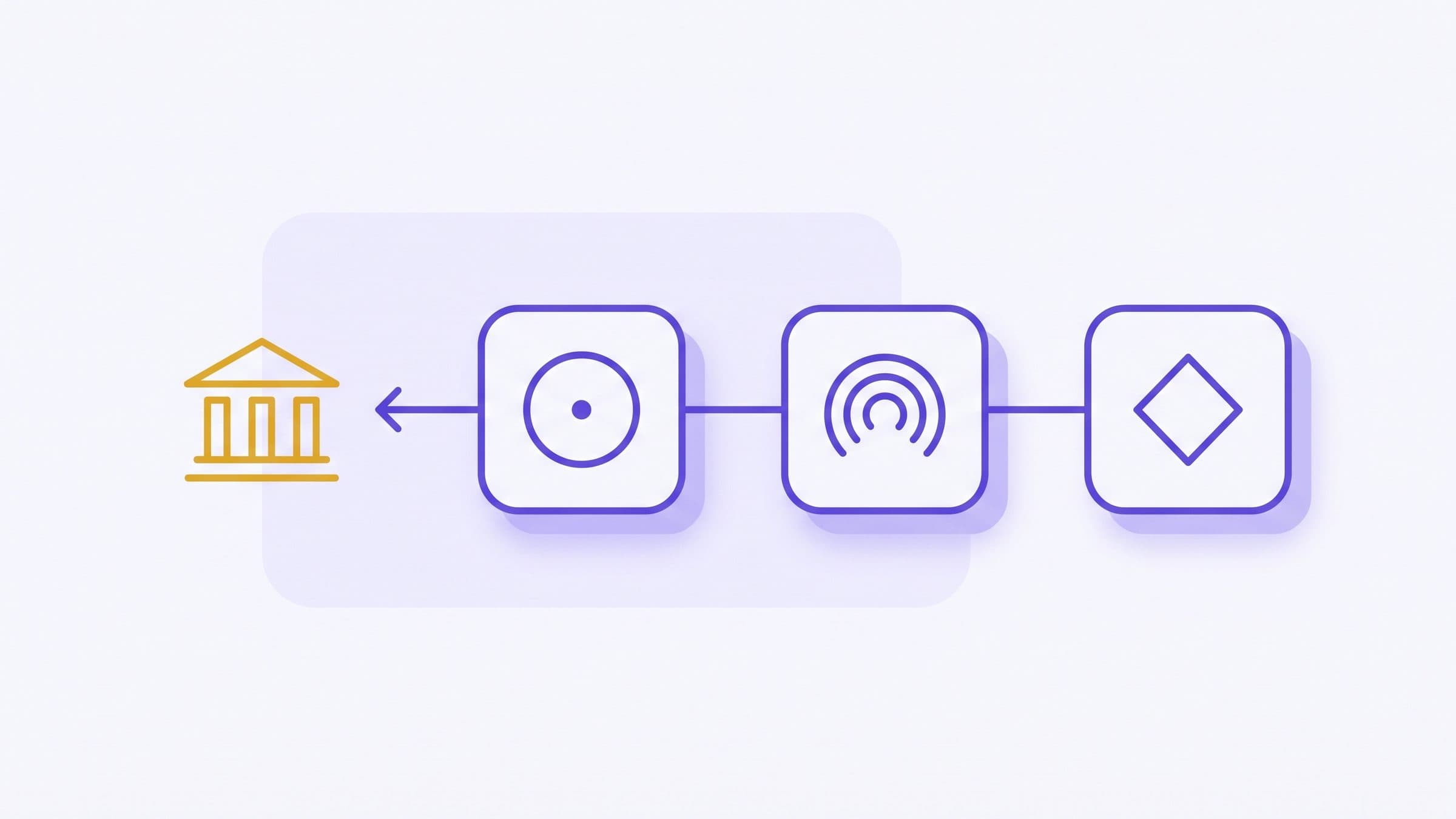
Send USDC or USDT to the wallet we give you. We screen the transfer, convert it into Australian dollars at our desk, reconcile the amount, and pay the AUD to your eligible Australian bank account. That is the whole off-ramp: one trade, one settlement.
The six steps run in this order.
- 1You pick USDC or USDT.
- 2You send the digital asset to the wallet we designate.
- 3We run blockchain and compliance checks on the transfer.
- 4We convert the digital assets into AUD.
- 5We reconcile the AUD against your trade.
- 6We pay the AUD to your eligible Australian bank account, by bank transfer or over NPP/Osko.
Each trade here settles to a single bank account.
Definition
What is a crypto off-ramp in Australia?
A crypto off-ramp is the service that turns a stablecoin balance into Australian dollars sitting in an Australian bank account. The defining feature is the destination. An off-ramp ends in an account the business already controls and can spend from, not in a trading balance on someone else's platform.
The reason is operational. A business holding USDC still has to pay staff, suppliers and a tax bill in Australia, and all of that is denominated in AUD.
Most Australian pages on this topic are written for someone deciding what to buy. This one is for a finance team that already holds the asset.
Australian rails
Australian rails we fund and settle over
We fund and settle Australian trades over the same rails a domestic business already uses. AUD that buys stablecoins comes in over the funding rails below; AUD from an off-ramp goes back out over Osko (NPP) or bank transfer.
| Rail | Direction | Currency | What it is used for |
|---|---|---|---|
| Cards (Visa, Mastercard, Amex) | Fund | AUD | Card-funded stablecoin purchases |
| Apple Pay, Google Pay | Fund | AUD | Wallet-based funding on mobile |
| PayID | Fund | AUD | AUD transfers to a named address |
| PayTo | Fund | AUD | Pre-authorised AUD debits from a customer account |
| Osko (NPP) | Fund and pay out | AUD | Near real-time AUD funding and AUD payouts |
| BECS Direct Debit | Fund | AUD | Recurring AUD collection on a schedule |
| Bank transfer | Fund and pay out | AUD, USD | Standard funding and settlement |
| Crypto | Fund and pay out | USDC, USDT | The stablecoin leg of both ramps |
We settle in AUD, USD and crypto. AUD payouts go to a bank account or over NPP/Osko.
BECS Direct Debit is worth calling out: none of the five Australian crypto OTC desks we compare below names it. If your business collects AUD on a schedule and converts it to stablecoins, that is the rail that does the collecting.
If what you need is to take card and PayID payments from Australian customers rather than convert your own balances, that is a different product.
Regulation
Who regulates crypto on-ramps and off-ramps in Australia?
Two regulators matter, and they get confused. AUSTRAC administers Australia's anti-money laundering rules and keeps the register that virtual asset service providers must be on. ASIC regulates financial products and services. The ATO sets the tax treatment.
Under the Anti-Money Laundering and Counter-Terrorism Financing Act 2006, that register is now the Virtual Asset Service Provider Register, set out in Part 6A. Section 76A provides that an unregistered person must not provide certain virtual asset services. Most of the industry still calls it the digital currency exchange register, the Act's former name.
On the ASIC side there is a development almost nobody in this market has written up. ASIC granted class relief for intermediaries in the secondary distribution of eligible stablecoins and wrapped tokens. Those intermediaries are not required to hold separate Australian financial services, market, or clearing and settlement facility licences when providing services relating to eligible stablecoins or wrapped tokens. Eligibility turns on the issuer of the asset, not the intermediary. ASIC's digital asset guidance is INFO 225.
So the clarification worth keeping: AUSTRAC registration is not an ASIC financial services licence. Two regimes, two triggers. Our guide to AUSTRAC registration for crypto businesses sets both regimes out on one dated timeline, including the virtual asset service provider register that replaced the digital currency exchange register.
For scale, the Reserve Bank of Australia put global stablecoins at about US$250 billion at end-June 2025, almost entirely US dollar denominated.
Nothing above describes Boldrails’ own regulatory position; it is how the Australian regime works. Ask which entity you will be contracting with and which register it appears on, and run the same check on any desk you compare us against.
Sources: Anti-Money Laundering and Counter-Terrorism Financing Act 2006; ASIC, exemptions supporting digital asset innovation; Gilbert + Tobin, ASIC finalises relief for stablecoins and wrapped tokens; ATO, crypto asset transactions; Reserve Bank of Australia, Financial Stability Review October 2025

Who it is for
Which businesses use our Australian crypto desk?
We serve the platform, not the trader. Most of the five Australian desks compared in the next section sell a trade to the business doing the trading; MHC Digital Group and Independent Reserve also address fintechs and payment providers. What none of them sells is a named AUD rail set on both legs, priced for a platform running continuous volume.
We provide the AUD on-ramp and off-ramp that a platform runs for its own customers, under its own brand and inside its own product. That covers:
- Crypto exchanges
- Crypto brokers
- OTC desks
- Wallet providers
- Digital-asset platforms
- Fintechs
- Payment companies
We also accept verticals that mainstream Australian providers decline, including forex and CFD brokers and high-volume e-commerce.
The Australian market
How Australian crypto OTC desks compare
Here is the finding that surprised us. Only two of Australia's five most-cited crypto OTC desks publish a price at all, 0.1% and 0.25%, and both institutional desks quote-gate their pricing behind a $50,000 per-trade minimum.
| Provider | Published minimum per trade | Published fee | Settlement speed | AUD rails named | Sold to | Source, read 17 Aug 2026 |
|---|---|---|---|---|---|---|
| Boldrails | None per trade; enquiries from $100k a month | Confirmed at onboarding | AUD, USD and crypto settlement | PayID, PayTo, Osko, BECS Direct Debit, bank transfer | Exchanges, brokers, wallet providers, digital-asset platforms, fintechs, payment companies | Our rails table above |
| MHC Digital Group | AUD $50,000 | Not published, quote-gated | Same day | Bank | Wholesale investors, funds, corporate treasuries, fintechs and neobanks, remittance providers | mhcdigitalgroup.com |
| Zerocap | Not published | Not published | Not published | Not named | Wholesale clients for regulated products | zerocap.com |
| Independent Reserve | Over $50,000 | Not published, quote-gated | Same day; AUD in seconds | Bank transfer (AUD), SWIFT (USD) | Remittance and payment providers | independentreserve.com |
| CoinSpot | AUD $20,000 | 0.1% per OTC transaction | Instant after trade | PayID, direct deposit | Retail and business, stated as everyone | coinspot.com.au |
| FastStables | Not published | 0.25% | In minutes | Bank | Exporters, SaaS firms, agencies, consultants | faststables.com |
Every figure above is the provider's own published number, read from its own public page on 17 August 2026. None of the five carries an effective date, so any of them can change without notice. Not one of the five sources its figures or compares named providers. That is why we date ours.
Comparison compiled and reviewed by Claude Igrow, Payments Specialist
Some of these desks beat us on things we do not claim. MHC Digital Group offers regulated derivatives access and names institutional custody providers. Independent Reserve publishes an audit and holds reserves 1-to-1 with no rehypothecation. CoinSpot publishes the lowest fee among the providers compared here and holds ISO 27001. We make none of those claims, and you should weigh them.
What none of the five publishes is a rail set on both legs of the trade, and none prices OTC liquidity for a platform running volume month after month rather than placing one block trade. That is where our pricing starts.
Pricing
Pricing, minimums and how to start
We price each desk relationship on your monthly volume, your corridors and the assets you move. Pricing and limits are confirmed at onboarding, because a platform running AUD flows for its own customers does not price like one block trade. Enquiries from $100k a month.
How it runs:
- 01
Enquire
Tell us how much AUD you move each month and in which direction. We tell you what we can do before you commit anything.
- 02
Onboard
We collect your company documents and beneficial ownership, run KYC and AML screening, and confirm your pricing and limits. Onboarding takes 3 to 14 days, depending on your case.
- 03
Convert and settle
You fund in AUD or send stablecoins. Every trade produces a reconciliation record you can match against your own ledger.
Tell us your monthly AUD volume and which direction you need. Onboarding takes 3 to 14 days, depending on your case.
FAQ
Crypto OTC in Australia, answered
Last updated: 2026-08-17