Crypto OTC
Crypto payments and OTC for gaming operators, licensed stablecoin settlement
Boldrails runs a licensed crypto payment gateway and OTC desk for gaming and iGaming operators. We acquire crypto deposits, settle in stablecoins (USDT, USDC) or fiat, and disburse player withdrawals as a licensed principal. We accept high-risk operators, hold the necessary licences required in the markets we serve, and onboard in 3 to 14 days, depending on your case.
- Accept crypto deposits, settle to fiat or stablecoins
- USDT and USDC across TRON, Ethereum, Solana, Polygon
- High-risk acceptance, licensed principal, licences held where we serve
- OTC desk for operator treasury and player payouts
Onboarding in 3 to 14 days · one quote, one settlement, one compliance relationship
What it is
What is a crypto OTC desk for gaming operators?
A crypto OTC desk lets a gaming operator convert large amounts of crypto to fiat or stablecoins at a fixed, off-exchange quote, without moving the market against itself. Boldrails runs one as a licensed principal, and pairs it with a crypto payment gateway that accepts player deposits and funds withdrawals. One licensed counterparty covers acceptance, settlement, payouts, and treasury. There is no partner PSP in the middle.
Most operators think about acceptance first. A player wants to fund an account with USDT or USDC, and the checkout needs to confirm the payment fast. That is the deposit leg. The second leg is the one operators underestimate. What happens to the crypto once it lands? You have to convert it, hold it, or pay it back out to players. A plain checkout widget stops helping you right there.
Boldrails runs both legs plus a crypto OTC desk for your float. The gateway acquires deposits and funds player withdrawals. The OTC desk converts your accumulated crypto to fiat or stablecoins at a fixed quote, so a large balance does not move against you while it sits. One licensed counterparty covers acceptance, settlement, payouts, and treasury.
It helps to separate the outcome from the mechanism. The outcome you want is simple: move player money in and out reliably, and keep your treasury stable while doing it. The mechanism is the gateway plus the OTC desk. We provide that mechanism and hold the licences behind it. So you deal with one regulated provider instead of stitching together a processor, an exchange, and a bank.
We settle in the asset you choose. You can take incoming crypto and settle to fiat, or keep it in stablecoins if you hold crypto reserves. USDT and USDC are the two settlement stablecoins we use most, because they hold a stable value and move across networks quickly.
This is the model gaming and iGaming operators actually need. You hold your gaming licence. We hold the payment and crypto licences. Between us, that covers the full money loop: player deposit, stablecoin settlement, player payout. And you never have to touch a card acquirer that may not want your business.
High-risk acceptance
High-risk acceptance: why gaming operators get de-banked, and how we solve it
Gaming and iGaming are high-risk verticals to a card acquirer. That classification is the root of most payment problems operators face, and it is why a crypto rail with real high-risk acceptance matters.
Here is the pattern operators keep running into with card processors:
- High-risk MCC coding. Gaming merchant category codes trigger extra scrutiny, higher reserves, and pricing well above standard e-commerce rates.
- Selective onboarding. Many acquirers decline gaming outright, or approve you then change their mind after a review.
- Frozen or closed accounts. A single spike in volume or a compliance flag can freeze settlement, sometimes with funds held for months.
- Higher fees. Industry write-ups on iGaming payments describe card rates around 2.5% to 3.5%, with some high-risk arrangements climbing toward 10% once reserves and penalties stack up (fluidpayments.io, 2026).
A licensed crypto rail sidesteps card-scheme de-risking. Crypto settlement does not run on Visa or Mastercard rails, so no acquirer gets to decide your vertical is too risky to bank. We acquire and settle the crypto directly as a licensed principal. You still get a regulated, AML-gated provider. You just stop depending on a card network that treats gaming as a liability.
High-risk acceptance is not the same as no rules. We run full KYB on every operator and screen every settlement. What we will not do is refuse you for being in gaming. That is the gap between a bank that de-risks and a licensed principal built for high-risk verticals.
We accept these verticals at a capability level:
- Online casino and iGaming operators
- Sportsbook and betting operators
- Sweepstakes and social gaming
- Forex and CFD brokers
- Other high-risk businesses that hold the right licences
You can see the methods and verticals we support in one place. Acceptance always depends on your licences and your market. But gaming does not disqualify you here. It is what we are built for.
Acceptance matrix
Which crypto OTC desks accept iGaming operators?
No exchange or institutional OTC desk publishes an acceptance position for iGaming at all. We do. Licensed operators under regimes like the MGA and UKGC, and offshore-licensed operators under Curaçao or Anjouan, are accepted, subject to enhanced due diligence and proof of licence.
The rows below are the iGaming slice of our vertical acceptance matrix, recording what each desk category actually publishes. Where a desk's pages say nothing, the cell says so.
| Operator type | Exchange OTC desks | Institutional RFQ and eOTC | Crypto-native desks | Boldrails |
|---|---|---|---|---|
| Licensed iGaming (MGA, UKGC) | Not publicly offered | Not publicly offered | Prose-level positioning only, no published acceptance | Accepted, subject to enhanced due diligence and licence proof |
| Offshore-licensed iGaming (Curaçao, Anjouan) | Not publicly offered | Not publicly offered | Not published | Accepted, subject to enhanced due diligence and licence proof |
Methodology: checked on 2 August 2026 across five published crypto OTC resources (CoinsPaid, Finery Markets, alt.co, CryptoSlate and one industry advertorial) plus the exchange desk pages they profile. A cell reading not publicly offered or not published records the absence of a published policy on that desk's pages, never a refusal.
Licence regimes referenced: Malta Gaming Authority · UK Gambling Commission
Our cells are capability statements, not per-country claims. Which markets we can serve for a given licence is confirmed at onboarding, and the canonical list of verticals and markets lives in our Acceptance Index. The full matrix, covering forex, adult, marketplaces and crypto-native businesses alongside iGaming, sits on our high-risk OTC page.
Venue or counterparty
Is an OTC desk a trading venue or a settlement counterparty?
Both exist under one name, and they are different products. A trading venue optimises execution for clients it has already approved: quote, size, fill. A settlement counterparty decides whether you get approved at all, then carries the trade and the payout itself. Gaming operators fail at acceptance, not execution.
The industry runs three execution formats: a human desk you message for a quote, request-for-quote platforms, and automated eOTC. All three describe how a trade fills. None of them tells you whether a desk will take a gaming operator in the first place.
If your operation qualifies for a major exchange desk, use it. If it has been declined, off-boarded, or left waiting with no decision, execution quality was never your problem. Acceptance was. We approve the business, we quote as principal, and we settle.
Crypto vs card
Crypto vs card: chargebacks, cost and settlement speed
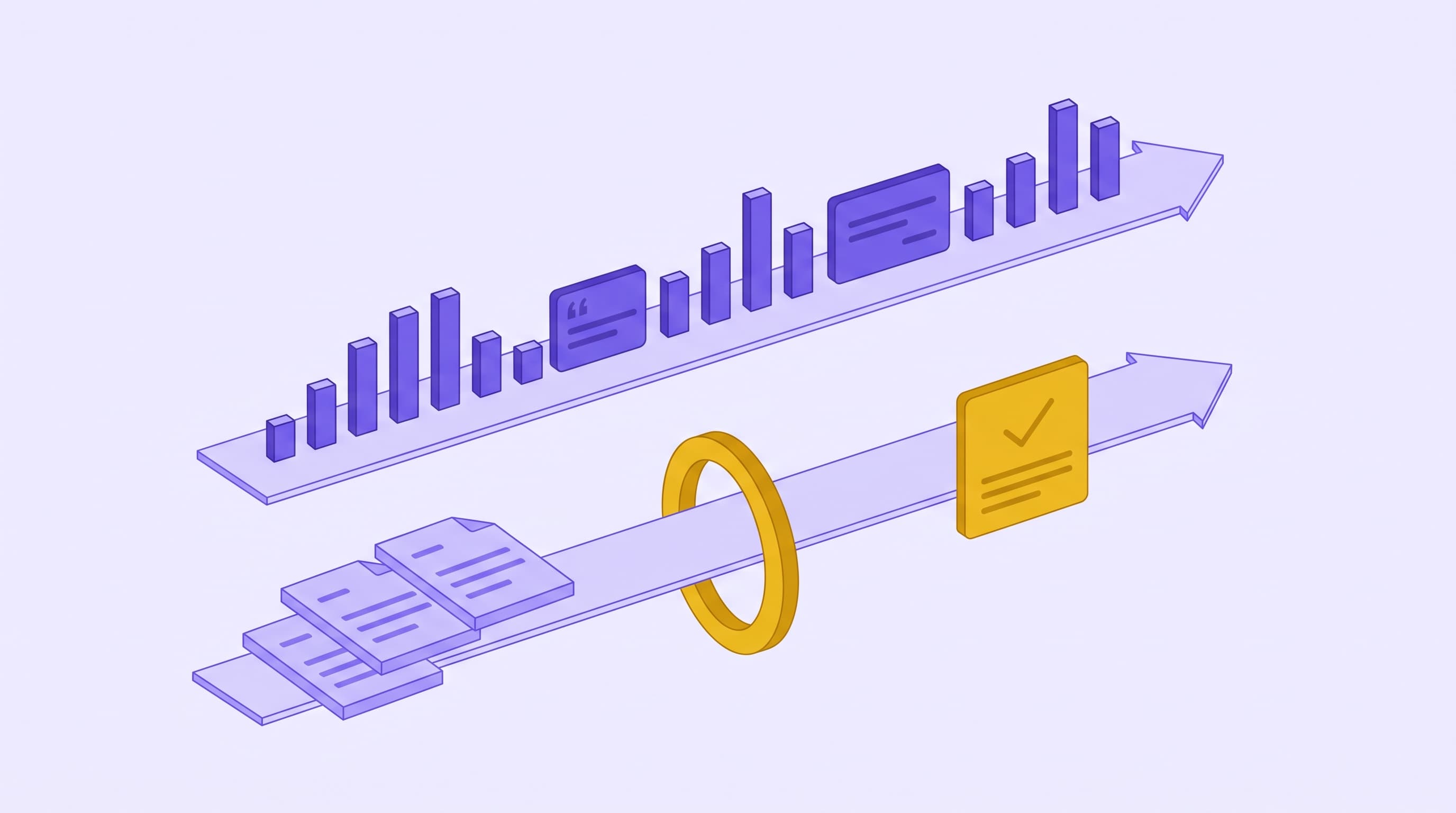
Operators move to crypto for three concrete reasons: no chargebacks, lower cost, and faster settlement. The table below sets card and crypto side by side. The fee and speed figures are market context from published iGaming payment sources, dated 2026. They are not a Boldrails quote.
| Factor | Card acquiring | Crypto settlement |
|---|---|---|
| Chargebacks | Yes, disputes and reversals apply | None, crypto payments are final |
| Typical processing fee | 2.5% to 3.5% (industry pricing, 2026) | 0.5% to 1% (industry pricing, 2026) |
| Settlement speed | 1 to 5 business days | Near-instant on-chain |
| High-risk reserves | Common, funds held back | Not applied to crypto settlement |
| Reach in banking-restricted markets | Limited | Works where cards are declined |
Chargebacks are the sharpest contrast. Card payments can be disputed and reversed weeks after the fact, and gaming sees more of this than most verticals. Crypto payments settle on-chain and do not reverse. Once a deposit confirms, it is final. That takes a whole category of loss and dispute overhead off your books.
Cost follows. Published iGaming payment comparisons put card acquiring around 2.5% to 3.5%, while crypto processing sits closer to 0.5% to 1% (fluidpayments.io, 2026). Boldrails prices per operator based on your volume and markets, so we quote your rate directly rather than posting a single number here. Request a quote through Get started.
Speed is the third reason. Card settlement runs 1 to 5 business days. Crypto settles near-instantly on-chain, which matters when you are funding player withdrawals and want your treasury to keep pace.
There is one honest tradeoff: crypto prices move. We handle that on settlement. We settle your incoming crypto to fiat or to stablecoins, whichever you choose, so you are not left holding a volatile balance. Settle to fiat and the exposure is gone. Keep stablecoins and you hold a value pegged to the dollar. Either way, the volatility question is answered at the point of settlement.
Player payouts
Player payouts and withdrawals at scale
Player payouts are the other half of the loop. For many operators they are the harder half. Deposits arrive one at a time. Payouts go out in bulk, often thousands at once, and players judge you on how fast they land.
We fund and settle the payout leg as a licensed principal. That means one counterparty. We do not route your withdrawals through a separate processor or ask you to pre-fund an exchange. You send the payout instruction, we disburse it, and it settles in the asset you pick, stablecoin or fiat.
Payout speed is a retention lever, not just an operations detail. iGaming payment analysis consistently ties slow withdrawals to player churn (fluidpayments.io, 2026). Players who get paid fast come back. Players who wait days do not. A crypto payout rail settles near-instantly on-chain, so you compete on speed instead of apologizing for it.
At scale, three things matter for a payout rail:
- Volume. Handle large batches of withdrawals in a single run, not one-off transfers.
- Speed. Settle on-chain in minutes, so players are not left waiting.
- Choice of asset. Pay in USDT, USDC, or fiat, depending on the player and the market.
We disburse across the same crypto and fiat rails we use for settlement, all driven by one API. If you also run fiat payout programs, our mass payouts at scale product covers bulk disbursement across cards, bank, and mobile money. And for crypto-native operators, the withdrawal leg and the deposit leg sit behind the same licensed provider. That keeps reconciliation clean and your treasury in one place.
MiCA and licensing
MiCA and licensing: what a crypto-gaming rail needs after the 2026 deadline
MiCA changed the rules for anyone providing crypto services in the EU, and the most recent change lands right now. MiCA became fully applicable in December 2024. Its transitional grandfathering window, under Article 143(3), closed on 1 July 2026 (ESMA, 2026). After that date, crypto-asset service providers in the EU need full CASP authorization to operate. The grace period is over.
That is the single most important fact for an EU-facing crypto-gaming rail today. A provider either holds CASP authorization on the ESMA register, or it should not be settling crypto for EU-facing operators. ESMA coordinates the register. National regulators grant the authorization. The European Banking Authority (EBA) is named as a co-supervisor for significant stablecoins under MiCA (ESMA, 2026).
Two sets of licences are in play, and operators often confuse them. The operator holds the gaming licence. The payment provider holds the crypto and payment licence. Boldrails holds the payment and crypto side; you hold the gaming side. The table below separates them by region.
| Region | Payment / crypto regulator (provider) | Gaming regulator (operator) |
|---|---|---|
| European Union | MiCA / CASP authorization, national regulators under ESMA | Malta Gaming Authority (MGA), Gaming Act Cap. 583 |
| Germany | BaFin, national regulator under MiCA | national gaming authority |
| United Kingdom | FCA cryptoasset registration (MLRs 2017) | UK Gambling Commission (UKGC) |
| United States | FinCEN MSB registration plus state money transmitter licences | state gaming authorities |
| Canada | FINTRAC MSB (virtual-currency dealing) | provincial authorities, such as AGCO in Ontario |
| Australia | AUSTRAC digital currency exchange registration | state gaming authorities |
| Philippines | BSP VASP registration | PAGCOR |
| Singapore | MAS, Payment Services Act | local gaming authority |
Boldrails operates as a licensed principal and holds the licences required in the markets we serve. We assert this without publishing registration numbers. The regulator types above show the framework we operate within, and our organization credentials are declared in structured data. Why does this matter for you? A licensed principal settles the crypto itself. There is no chain of partner PSPs that each need their own authorization and each add a point of failure.
A few rows carry a note. The AUSTRAC and MAS entries are stated conservatively pending a second confirming source, and EBA's exact stablecoin-supervision scope is described as ESMA presents it. We would rather understate a regulatory claim than overstate one. Where sources disagree, we take the conservative reading.
Requirements vary by operator market and regulator, and the table shows the framework, not a guarantee for every jurisdiction. The practical takeaway is blunt. After 1 July 2026, "we are working on our licence" is not good enough for an EU-facing crypto rail. Ask any provider, including us, which authorizations they hold and where. You can also review the methods and verticals we support alongside this framework.
OTC treasury
Why an OTC desk for your operator treasury (not just a checkout widget)
Most crypto gateways stop at the checkout. They accept a deposit and hand you a balance. Then you are left with a treasury problem they do not solve. What do you do with a large, growing pile of crypto? And how do you fund big payout runs without moving the market against yourself?
That is what an OTC desk is for. OTC means over-the-counter, a trade done off the public order book at a fixed quote. We quote and settle that trade as a principal. Here is why it beats the alternatives for an operator treasury:
- No slippage. You get a fixed price on the full size before you trade. A single quote covers the whole block, so the price you agree is the price you get.
- No public market impact. The trade happens off the order book, so a large conversion does not push the visible price or signal your position.
- Deep liquidity in one ticket. We settle the full block as principal, rather than filling it in fragments across an exchange.
- Both directions. Convert accumulated crypto float to fiat, or source the crypto to fund a large payout run.
Compare that with the two things operators usually reach for. An exchange order book charges you slippage on any real size, and a large order visibly moves the price while it fills. A plain checkout gateway has no treasury layer at all; it accepts deposits and leaves the float sitting on your books, exposed to price moves.
The OTC desk sits on top of the gateway. Deposits and payouts flow through the rail, and the desk handles the treasury conversion behind them. We quote via an RFQ, a request for quote, then execute the block off the order book. Minimum ticket sizes for OTC block trades follow institutional norms, and we set ours to fit the operator's flow. A gateway plus a treasury desk under one licensed provider: that is the piece a checkout widget cannot give you.
Settlement networks
Settlement networks and developer integration
Which blockchain network a settlement uses drives both its speed and its cost. USDT and USDC run across several networks, and the right one depends on how fast and how cheap you need the transfer to be.
| Network | Role | Typical settlement time | Relative fee | Common use |
|---|---|---|---|---|
| TRON (TRC20) | Dominant low-fee USDT rail | Seconds | Low | High-volume USDT settlement and payouts |
| Solana | Fast, low-cost settlement | Seconds | Low | High-throughput payout runs |
| Polygon | Low-cost network | Seconds | Low | Cost-sensitive stablecoin flows |
| Ethereum (ERC20) | Base-layer USDT and USDC | Minutes | Higher | Regulated flows, broad wallet support |
TRON is the default for low-fee USDT movement, which is why it carries so much stablecoin volume. Solana and Polygon are fast, cheap alternatives when you push high transaction counts. Ethereum costs more per transfer, but it has the widest support and is common for regulated USDC flows. We settle USDC where operators want a regulated, US and EU-friendly stablecoin.
For your engineering team, we expose one integration for the whole loop. Our crypto payment gateway provides a REST API and webhooks that cover deposits, settlement, and payouts.
You get:
- Deposit endpoints and webhooks that confirm player deposits as they settle on-chain.
- Settlement configuration so you choose the network, the stablecoin, and whether to settle to fiat or crypto.
- Payout instructions for single and bulk player withdrawals through the same API.
- A sandbox to test the full flow before you go live.
The terms your developers will search for, stablecoin settlement and a crypto payment API, both describe the same thing here: one licensed rail that handles acceptance, settlement, and payouts, with the network choice in your hands.
Safe and compliant
Is crypto gaming settlement safe and compliant? (and the no-KYC myth)
Yes, crypto gaming settlement is safe and compliant when it runs through a licensed provider. Boldrails is a licensed principal. We hold the licences required in the markets we serve, and we run KYB, KYC, and AML checks on every operator we onboard. We screen the source of funds and run sanctions checks on settlements. Compliance is the rail here, not a bolt-on.
Search results push a tempting idea: the "no-KYC" or "anonymous" crypto gateway. For a regulated gaming operator, that is a trap, and it is worth saying plainly. A no-KYC rail exposes you to money-laundering flows you cannot see, sanctions breaches you cannot defend, and the loss of your own gaming licence when a regulator asks how you settle player funds. An anonymous gateway is not a shortcut. It is a liability that puts both your licence and your bank relationships at risk.
A licensed, AML-gated rail is the only durable option for an operator that plans to stay in business. It is slightly more work at onboarding, because we verify you properly. In return you get a settlement provider that regulators recognize, one that will not disappear when scrutiny arrives and keeps your money loop defensible. For a business built on a gaming licence, that tradeoff is not close.
MiCA reinforces the point. In the EU, crypto services now require CASP authorization, and that authorization assumes AML controls, not their absence. The direction of regulation everywhere is toward more identity and source-of-funds checking, not less. Building on a compliant rail today is building on the side the rules are moving toward.
Who it's for
Who it's for
Boldrails is built for licensed high-risk operators that need crypto acceptance, settlement, and treasury in one place. That includes:
Licensed online casino and iGaming operators
Sportsbook and betting operators
Sweepstakes and social gaming platforms
Forex and CFD brokers
Other high-risk businesses that hold the required licences
PSPs and platform providers serving any of the above
We work at a capability level. Acceptance depends on your licences and your markets, and we confirm the details during onboarding. Operators that also move money across borders, for affiliates, suppliers, or group entities, pair our crypto OTC for remittance corridors with the gaming rail.
Compare
How Boldrails compares
The table below sets Boldrails next to five crypto payment providers gaming operators evaluate. Competitor figures are their own published pricing where available; quote-gated providers are marked accordingly.
| Provider | Model | Crypto / stablecoins | Settle to fiat or stablecoin | High-risk acceptance | Licensing / MiCA | OTC treasury | Pricing |
|---|---|---|---|---|---|---|---|
| Boldrails | Licensed principal | USDT, USDC and major crypto | Both, your choice | Built in | Licensed principal, licensed where we serve | Yes, OTC block settlement | Custom quote |
| Triple-A | Processor / gateway | Stablecoins and major crypto | Both | Gaming-facing | Singapore, per company statement | No | Custom quote |
| CoinsPaid | White-label PSP | 25+ crypto and stablecoins | Both | iGaming-native | Estonian VASP | White-label desk | ~0.5% to 1% |
| B2BinPay | Regulated gateway | ~80 coins, 9 chains | Both, SWIFT and SEPA | Gaming-facing | FSC Mauritius VASP, El Salvador CNAD | No | 0.25% to 0.50% |
| CoinGate | MiCA gateway | BTC, USDC, 10+ | EUR, USD or crypto | Gaming among industries | MiCA CASP, Bank of Lithuania | No | From 1% |
| NOWPayments | Non-custodial gateway | 300+ coins | Crypto, auto-convert options | Gaming-facing | non-custodial model | No | Custom quote |
The pattern is clear. Most providers are processors or gateways: they accept crypto and hand you a balance. Boldrails is a licensed principal that acquires, settles, disburses, and runs an OTC treasury desk on top. So acceptance, payouts, and treasury all sit behind one regulated counterparty. No single competitor in this table offers that combination.
FAQ
Crypto gaming settlement questions
Last updated: 2026-07-01