Airtel Money API
Airtel Money API integration
Boldrails provides Airtel Money collections and payouts through one API, built on the Airtel Africa Developer Portal. We collect and disburse Ugandan shillings over Airtel Money in Uganda for both pay-ins and payouts, serving high-risk and high-volume businesses, with onboarding in 3 to 14 days, depending on your case.
- Uganda, pay-ins and payouts
- Airtel rule, no extra charge to the paying customer
- Onboarding, 3 to 14 days, depending on your case
Uganda Airtel Money runs in production today, onboarding in 3 to 14 days
Last updated: 1 August 2026
The rail
What is the Airtel Money API?
The Airtel Money API is how a business sends and receives money over Airtel Money, the mobile money rail Airtel runs across Africa. It has two core products. Collections (C2B) pull money from a customer's wallet. Disbursements (B2C) send money to one. Airtel Money Pay is the merchant acceptance product that sits behind them, and it issues you a merchant code. Airtel publishes all of it through the Airtel Africa Developer Portal. Boldrails provides both directions through a single integration.
One naming problem trips up almost every search. Airtel also runs an enterprise API marketplace in India at a different domain, under a different company, with nothing to do with mobile money. In Nigeria, Airtel's financial business is SmartCash Payment Service Bank, licensed by the Central Bank of Nigeria in 2022. That is a payment service bank, not the Airtel Money rail. This page is about Airtel Money, the African mobile money rail.
This is also a business page, not a consumer one. It covers collecting and disbursing at volume through an API. It does not cover the Airtel app, the star-185-hash menu, or becoming an agent. If you want the wider rail set, start at our mobile money API hub.
Collections
How do Airtel Money collections work?
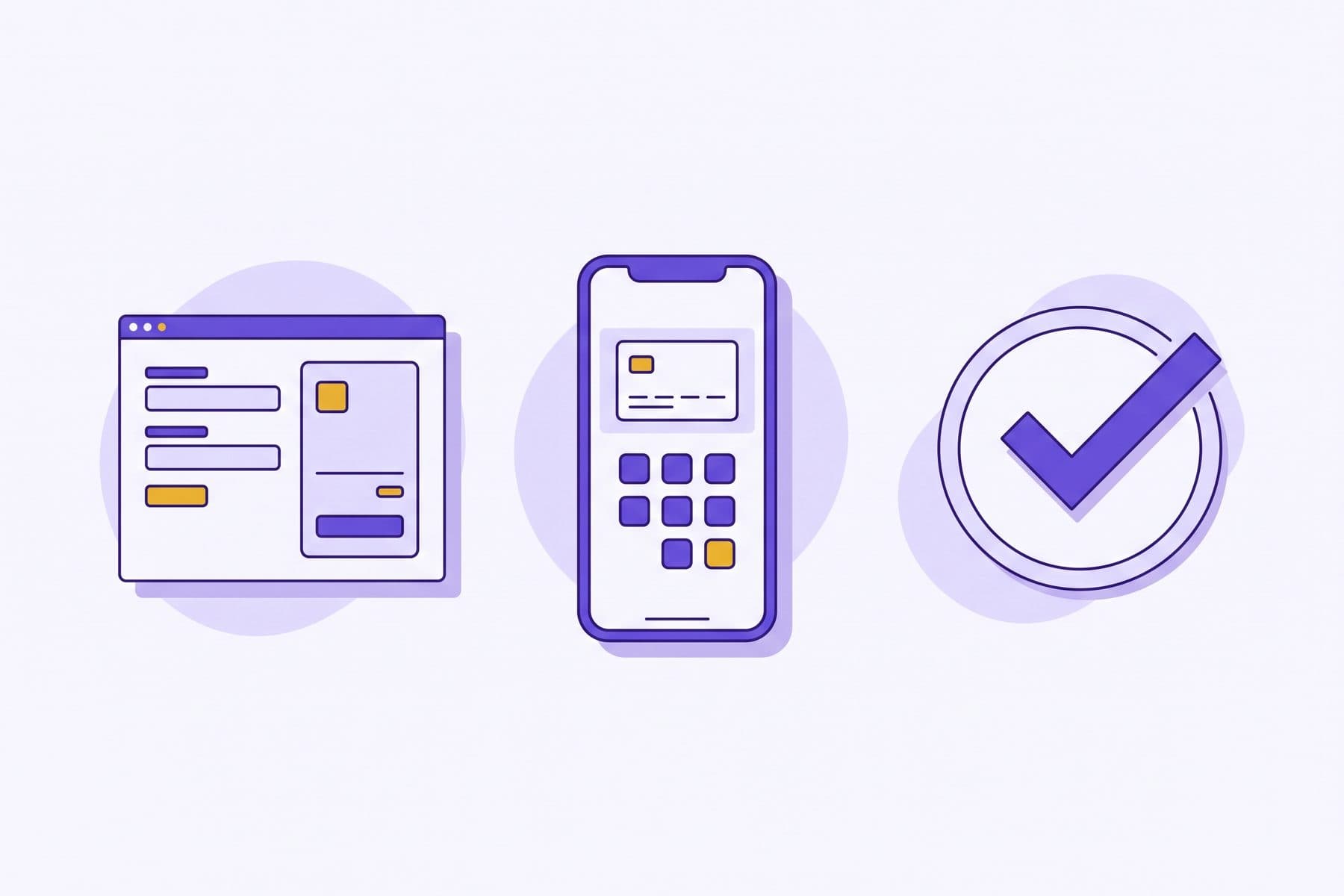
Airtel Money collections work by request and approval. Your system asks for a payment, the customer approves it on their own handset with their Airtel Money PIN, and Airtel tells you what happened. You never hold the customer's credentials.
- 1
We authenticate server to server using OAuth 2.0 client credentials, exchanging a client ID and a client secret for a short-lived access token.
- 2
We send a collection request against the customer's Airtel Money number, for an amount in UGX, with a unique reference from your system.
- 3
The customer gets a USSD push on their phone and approves it with their Airtel Money PIN.
- 4
Airtel posts the result to a callback URL, and we post the final status into your system.
Payment is instant on success, and Airtel's merchant documentation confirms both the merchant and the customer receive an SMS confirmation, so your callback is not the only record either side holds.
Because the customer approves on their own device, no card data enters your systems, so this rail carries no card PCI scope for you. A customer can also pay your merchant code from inside the Airtel Money menu, which is the cleaner option for in-person sales and invoices where you want the payer to control the reference. ClickPesa documents the same two collection routes on the Tanzanian side of the rail, and McTaba's Uganda integration guide sets out the same request and callback pattern.
Payouts and settlement
How do Airtel Money payouts and settlement work?
Airtel Money disbursements send funds straight to a wallet, and bulk disbursement pays a whole recipient list in one instruction. Getting your own money out of the merchant wallet is a second question, and it is the one no page ranking for this keyword answers.
Here is what Airtel Uganda publishes in its own merchant documentation.
Disbursements and mass payouts
One instruction pays payroll, refunds, commissions or affiliate runs. If you need this across rails rather than just Airtel, that is our mass payouts product and its developer reference, the payout API.
Three routes out of the merchant wallet
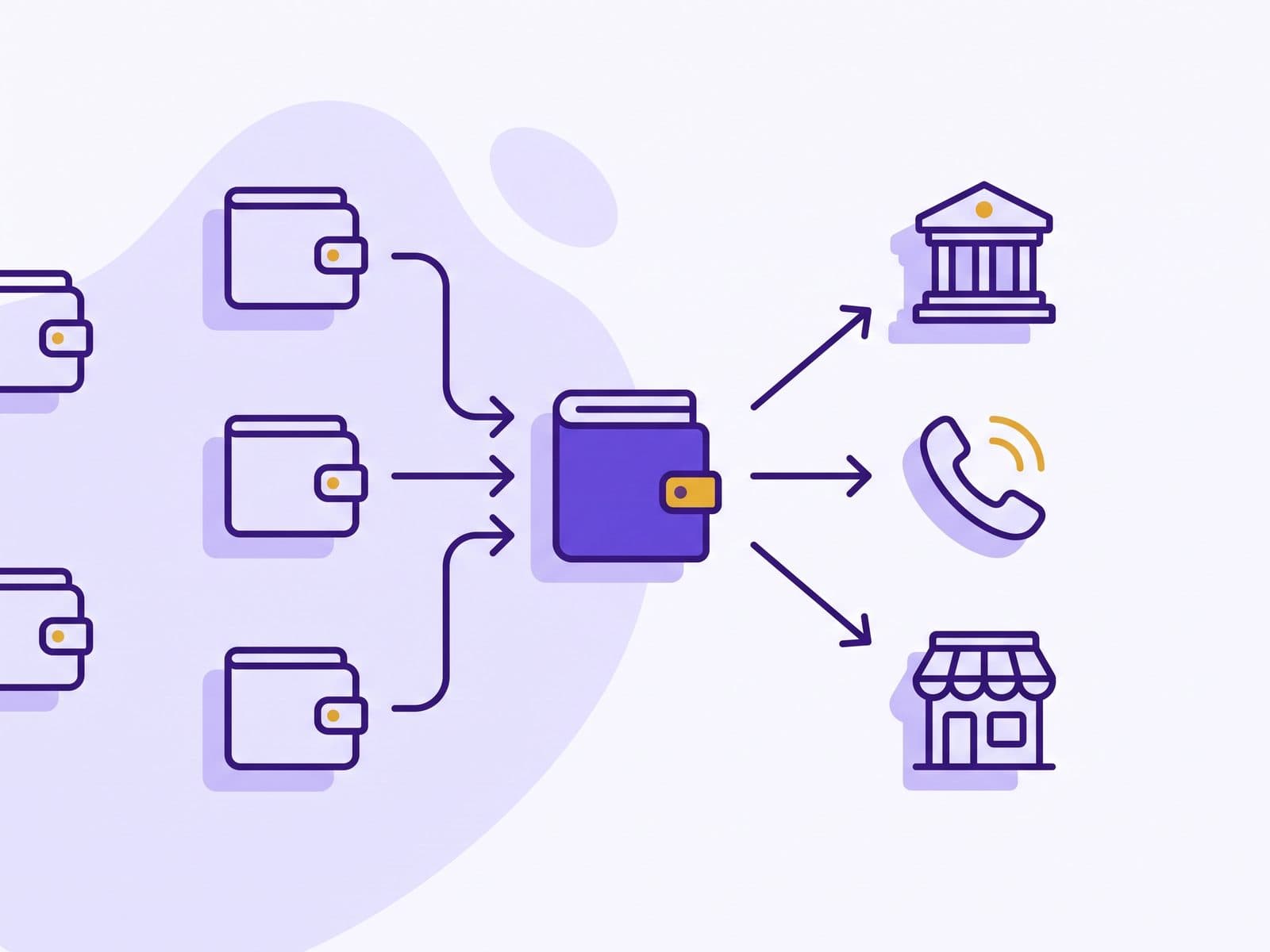
A standing order for liquidation moves funds to your bank account. A Pay Subscriber float transfer gives you what Airtel calls faster access to your funds "at no additional cost". Merchant to merchant B2B moves value to another merchant.
Controlled liquidation
Funds can only be liquidated to bank accounts you have already instructed Airtel to use. It reads like a restriction. It is a fraud control, and it is the reason a compromised login cannot redirect your settlement.
Timing, attributed
Airtel's own merchant guidance says a standing order bank liquidation usually takes between 24 to 48 hours for funds to reflect. That is Airtel's statement about the rail. Our own settlement cadence is configurable and agreed with you at onboarding.
Airtel Money collections in Uganda are denominated and settled in UGX. We say that plainly because it is a real constraint: the collected balance is UGX electronic money, and Airtel's rules only allow liquidation to a bank account you pre-instructed. Converting to USD, EUR or a stablecoin is a separate treasury step off this rail, available on request through our crypto to fiat settlement desk.
We run Uganda Airtel Money pay-ins and payouts.
Integration
How to integrate the Airtel Money API
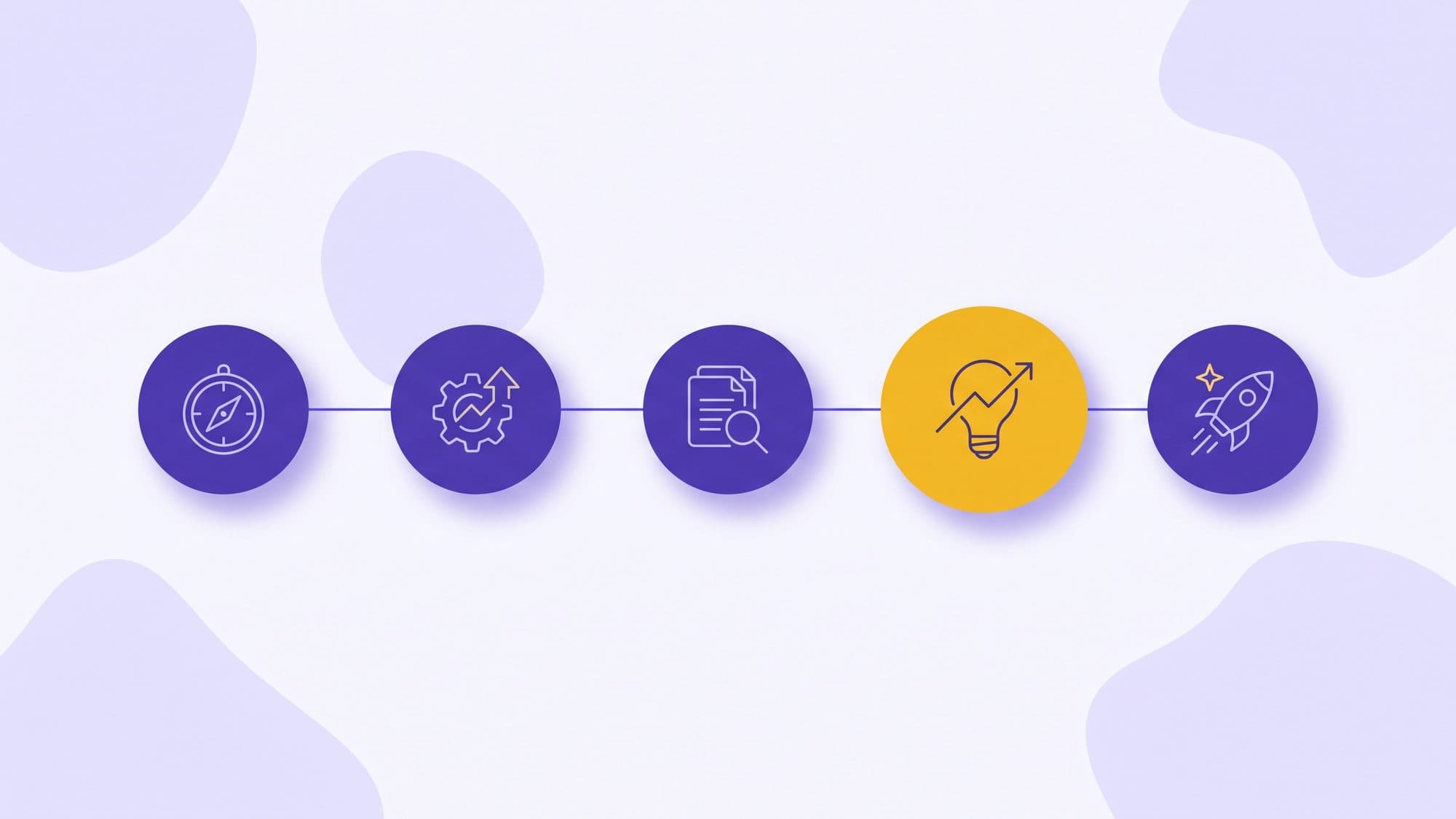
Five steps take you from nothing to live.
- 1
Decide your route
Go direct and carry the Airtel contracting, KYB and licensing yourself, or integrate through us and skip all three.
- 2
Register an application
Register on the Airtel Africa Developer Portal and retrieve your client ID and client secret. The portal is where the API documentation, app registration and sandbox access all live.
- 3
Build against the sandbox
Test collections and disbursements in the sandbox before you touch production.
- 4
Complete KYB
Airtel's merchant requirements run to seven company documents: certificate of incorporation or registration, memorandum and articles, a statement of particulars of directors, Company Form 18 or an LC letter, a valid trading licence, directors' national IDs or passports, and a TIN certificate.
- 5
Go live
Production keys issue once compliance and product approval clear.
Two things are worth knowing before you plan a timeline, and almost nobody states either. First, applications are managed per operating company, not once for the continent. Airtel's portal says applications are managed per Op-Co and asks you to select a country before you can proceed, so a second market means a second application, second credentials and a second approval. Second, Airtel states that once every document is provided, a merchant code issues within one day. The code is the fast part. The compliance approval in front of it is the slow part, and it is why a developer thread on r/Uganda about getting API access calls it "a bit of a hustle", and why DEV Community wrote up the pattern of signing a contract before you can read the docs.
That gate is the reason we exist on this page. We already hold the Airtel relationship, so Boldrails onboarding is 3 to 14 days, depending on your case. In our onboarding the calendar time goes into compliance review, not into code, and the businesses that move fastest are the ones with their company documents ready on day one.
One practical detail worth stealing: you can route a payment to the right rail from the customer's number prefix, so the customer never has to tell you whether they are on Airtel or MTN. And if you need more than 100 merchant lines, Airtel says you will need approval from the Uganda Communications Commission.
Cost structure
What does it cost a business to move money on Airtel Money?
Four published cost lines shape the economics, and only two of them are charged to you. The paying customer is charged nothing extra to pay a merchant, which surprises most people planning a checkout.
| Cost line | Who pays it | Published rate | Source |
|---|---|---|---|
| Paying a merchant from an Airtel Money wallet | The paying customer | No extra charges | Airtel Uganda Merchant FAQs, 2026 |
| Airtel PUSH collection bands | The merchant collecting | UGX 700 on small collections, rising to UGX 16,500 and then flat from UGX 2,000,001 to UGX 5,000,000 | FINCA Uganda published Airtel PUSH bands, May 2024 |
| Mobile money withdrawal excise duty | Whoever cashes out | 0.5% of the value withdrawn | Excise Duty (Amendment) (No. 2) Act 2018, via ICTD |
| Excise duty on money transfer fees | Charged on the fee itself | 15% of the fee, for non-bank operators | International Centre for Tax and Development |
Read the second row structurally rather than as a price list. Those are FINCA Uganda's published Airtel PUSH bands for its own channel, not Airtel's universal merchant tariff. The shape is what matters: the band fee stops rising at the top, so the effective percentage falls as your average ticket grows. On limits, a customer can pay a maximum of UGX 5,000,000 in one Airtel Money Pay transaction.
Boldrails pricing is quoted per account at onboarding, against your volume, market and vertical.
Coverage
Airtel Money and MTN MoMo in Uganda, and where each rail runs
Uganda runs on two mobile money rails, and most businesses need both. Here is where Airtel Money reaches, and where we run it. We compiled this table from Airtel's published market list, the developer portal's own country selector, and our own production status per market. The payout column is the part no other provider publishes, and it is usually the column that decides whether a rail is any use to you.
| Country | Airtel Money present | Collections on the rail | Payouts on the rail | |
|---|---|---|---|---|
| Uganda | Yes | Yes | Yes | |
| Kenya | Yes | Yes | Yes | |
| Tanzania | Yes | Yes | Yes | |
| Zambia | Yes | Yes | Yes | |
| Rwanda | Yes | Yes | Yes | |
| Malawi | Yes | Yes | Yes | |
| DRC | Yes | Yes | Yes | |
| Gabon | Yes | Yes | Yes | |
| Madagascar | Yes | Yes | Yes | |
| Nigeria | SmartCash PSB, a different product | Yes | Yes |
Read the columns as the rail's own reach: where Airtel Money operates, and where we collect and pay out over it. Coverage is per country because Airtel Money is licensed per country, and a wallet present in one market does not imply the same product in the next.
Three corrections to what you will read elsewhere. Airtel Africa states it operates in 14 markets, but the Airtel Africa Developer Portal's own country selector lists eight of them: Uganda, Kenya, Tanzania, Rwanda, Madagascar, DRC, Gabon and Zambia. So one API across 14 or more countries overstates what a developer can provision today, and applications are managed per operating company in any case. Uganda has no M-Pesa either, whatever a generic Africa guide tells you: mobile money there is the Airtel Money and MTN Mobile Money duopoly. And Airtel's Nigerian entity is SmartCash Payment Service Bank, a separately licensed CBN business, exactly as MTN's Nigerian entity is a payment service bank rather than the MoMo rail.
Choosing between the two Ugandan rails is usually not a choice. Your customers are split across both networks, so you take both and let number prefix routing pick. The other half of that pair is our MTN MoMo API page. For the country view, see payments in Uganda, payments in Zambia, payments in Tanzania and the Africa hub.
We accept licensed iGaming operators, forex and CFD brokers, crypto businesses and high-volume e-commerce, confirmed for your market and vertical at onboarding. No provider ranking for this keyword states a vertical policy in either direction. Ours is in the acceptance index.
Regulation
Who regulates Airtel Money in Uganda?
The Bank of Uganda regulates payment systems under Uganda's National Payment Systems Act 2020. The Act requires a licence in one of three categories, payment system operator, payment service provider, or payment instrument issuer, before anyone can operate a payment system, offer payment services or issue payment instruments.
Here is the part no ranking page mentions. Airtel Money in Uganda is not run by Airtel the telco. It is operated by Airtel Mobile Commerce Uganda Limited, a separate company holding a payment service provider (Class A) licence and a payment systems operator (electronic money systems) licence from the Bank of Uganda. Uganda's law requires that separation so electronic money sits inside its own licensed entity, and Airtel completed the transfer into it in 2021. Airtel's own merchant documentation states on every page that Airtel Money is regulated by the Bank of Uganda.
What that means for your risk model is simple. Under the Act a settlement is final once it is determined final under the payment system's rules, and Airtel's merchant rules state that a customer cannot initiate a reversal once a payment is processed and confirmed. So this rail carries no card style chargebacks. A refund is a separate forward payment, and a merchant approved reversal path exists if you agree to one. You do not need a payment licence to accept Airtel Money. Your provider does, and we hold the necessary licences required in the markets we serve.
FAQ
Airtel Money API questions
Last updated: 1 August 2026 · Written by Claude Igrow, Payments Specialist