Marketplace payments
Marketplace payment solutions that pay sellers where they are
Boldrails is a licensed payment provider for online marketplaces. We handle marketplace payment processing end to end: we acquire the buyer's payment, split it between your platform and your sellers, hold funds until your release conditions are met, and settle seller payouts on local rails, with onboarding in 3 to 14 days.
- Onboarding in 3 to 14 days
- We acquire, split and settle
- Local rails, not only ACH and SWIFT
Declined by an aggregator? We review the platform, not the category.
The category
What are marketplace payment solutions?
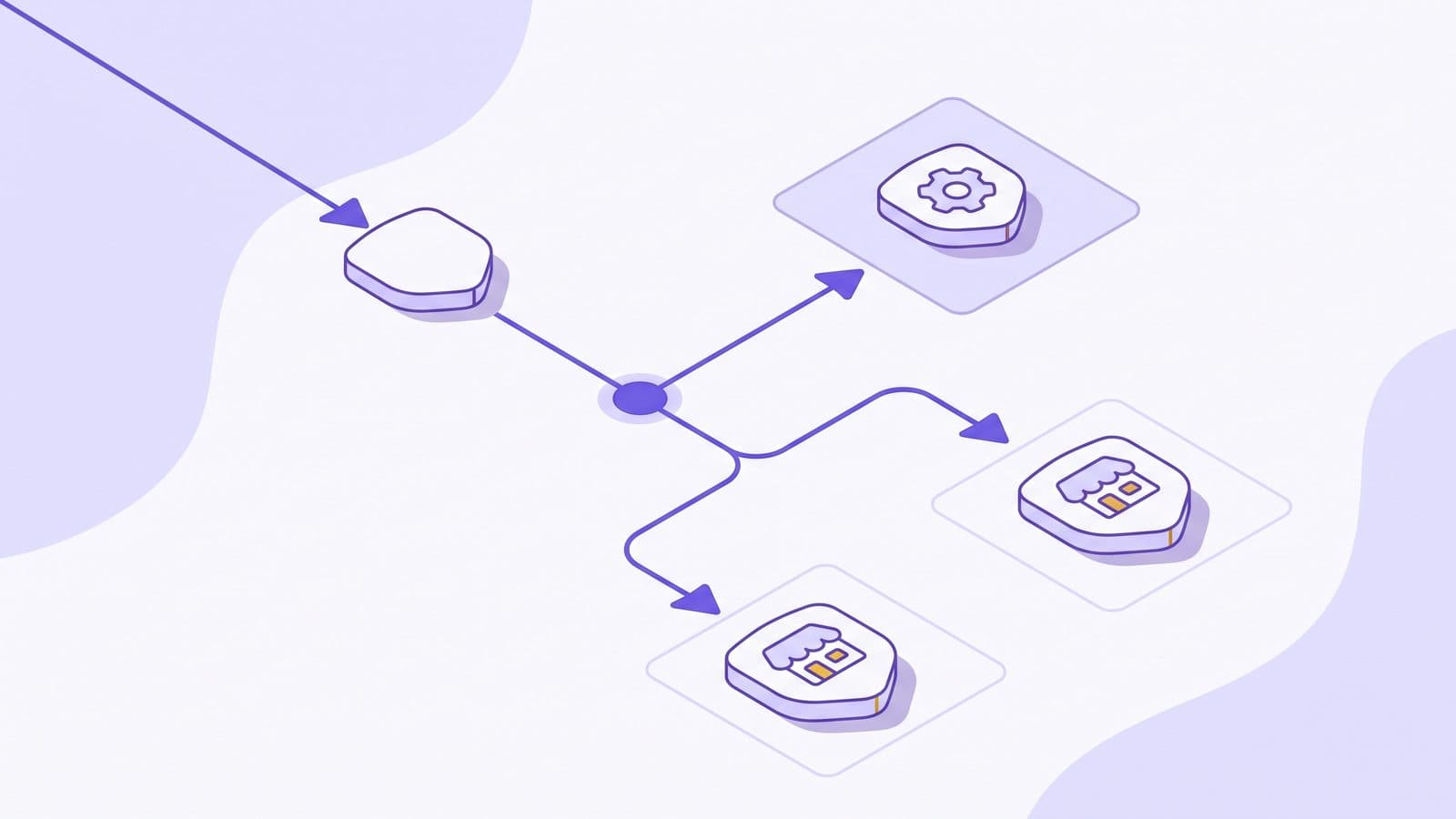
Marketplace payment solutions let a platform take one payment from a buyer, divide it between the platform and several sellers, and pay each seller out, without every seller holding their own merchant account. The platform is underwritten once. Sellers join as sub-merchants behind it.
That is the part most definitions get to. The part they skip is where your sellers actually live. A platform with sellers in Lagos, Sao Paulo or Manila cannot pay them on ACH and SWIFT alone. We handle the split and the seller payouts on the rails those sellers already use.
You need one of these if you run a multi-vendor store, a services platform, a rental platform or any model where money reaches more than one party. A payment gateway for a marketplace does more than a standard gateway: it adds seller onboarding, escrow-style fund holding and per-seller payouts on top of acquiring. It also moves the dispute liability. Your platform is the merchant of record, so chargebacks land with you rather than with the seller who shipped the goods.
The flow
How marketplace payment processing works, step by step
Marketplace payment processing runs in five steps: we acquire the buyer's payment, hold the funds under your release rule, calculate the split per seller, disburse each share, and settle it on the seller's local rail. Fraud prevention and PCI DSS controls run across all five.
- 1
The buyer pays
Card, bank transfer or a local wallet, on your checkout.
- 2
We acquire and authorise
The payment lands with us as principal. Our systems run on PCI DSS controls and screen the transaction for fraud.
- 3
Funds are held under your rule
Nothing moves until your release condition is met: shipment confirmation, proof of delivery, buyer confirmation or a fixed hold period.
- 4
The split is calculated per seller
Your commission, each seller's share and any tax withheld, applied per cart line rather than per order.
- 5
The payout settles
Each seller is paid on the rail they use, with per-seller reconciliation so your books and theirs agree.
Most providers describe steps one and two well and stop at the point where funds are held for some time. The release trigger and the rail step are where marketplaces actually get stuck.
Fund control
Split payments and holding funds until your conditions are met
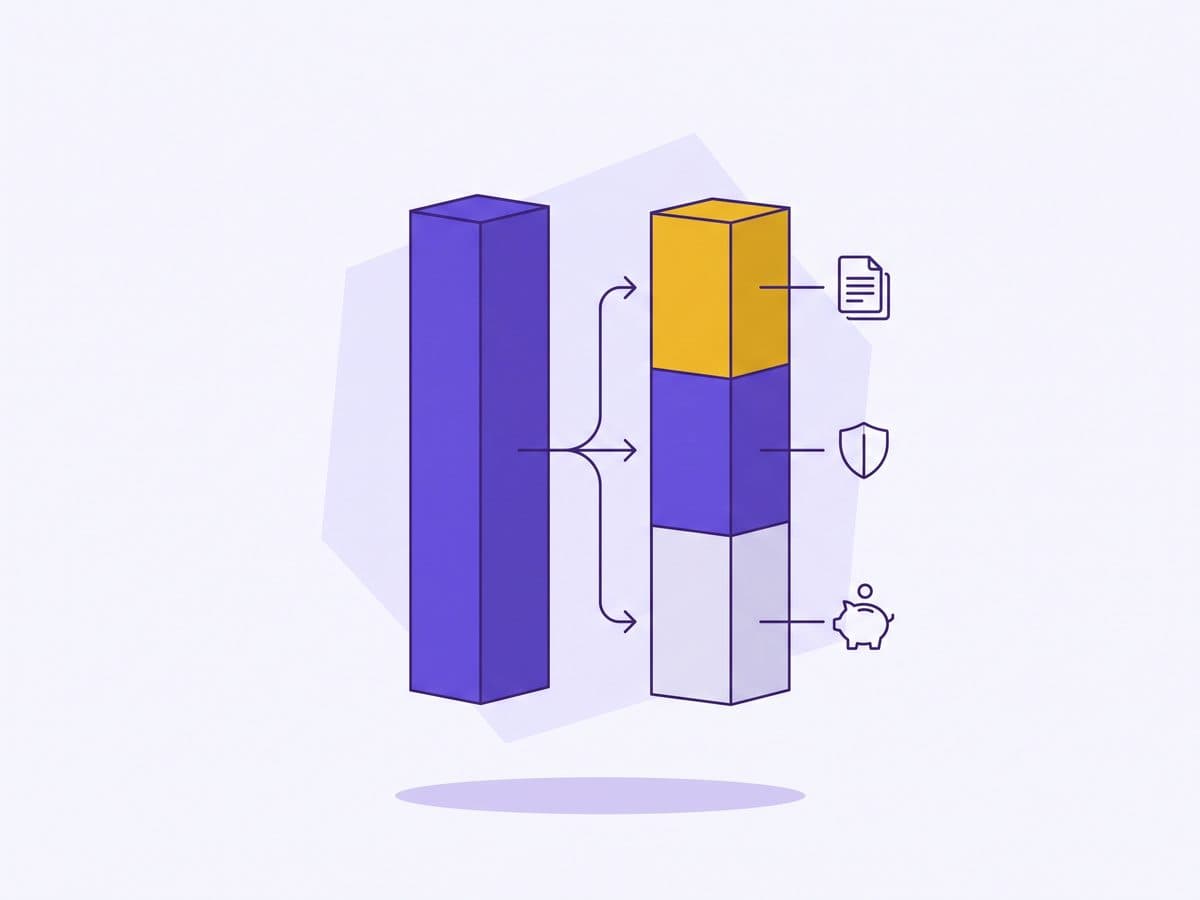
One capture becomes many credits. We take a single buyer payment, apply your split rules, and hold the money until the conditions you set are satisfied. Cross-border settlement and per-seller reconciliation run underneath, so every credit ties back to a line item.
Automatic split by cart line and seller ID
A basket with three sellers produces three seller credits and one platform commission, from one buyer charge.
Delayed disbursement
Release on shipment, on proof of delivery, on buyer confirmation, or after a fixed hold.
Escrow-style fund holding
Funds sit until your conditions are met. This is a payments capability we operate, not a regulated escrow product.
Rule-based logic
Commission, seller share and tax are calculated per transaction, not reconciled by hand at month end.
Two questions marketplace operators ask and rarely get answered: when are you funded, and is there a payout minimum? We settle on your agreed cycle and we do not hold a payout threshold that forces sellers to accumulate a balance before they are paid. Chargebacks route to the platform, because the platform is the merchant of record, so the fund-holding rules you set are also your dispute protection.
Seller verification
Onboarding and verifying your sellers
Getting your marketplace live takes 3 to 14 days, depending on your case. We need your entity documents, a description of your model and your expected volume. Seller onboarding then runs continuously, because the platform is underwritten, not each individual seller.
That distinction is what makes marketplace onboarding fast. A standard merchant account means every seller applies, waits and gets underwritten alone. Behind a marketplace structure, sellers join as sub-merchants under your approved platform, so they are verified rather than underwritten.
We verify individual sellers with KYC and business sellers with KYB. They are different checks. KYC confirms a person; KYB confirms a company, its registration and who controls it. Which one applies decides what a seller has to supply before their first payout can settle.
Seller payouts
Marketplace payouts: paying your sellers in the markets they are actually in
Across the ten marketplace payment providers profiled on the category's top-ranked page, the only non-Western payment rail named anywhere is AliPay. Four of them are credited with 200-plus countries of coverage and three more with 130-plus currencies, yet not one names a single African, Latin American or Southeast Asian domestic rail.
That is the gap we built for. A seller in Kenya wants M-Pesa. A seller in Brazil wants PIX. A seller in Indonesia wants QRIS. Local acquiring on the pay-in side and local rails on the payout side are what actually get a seller paid, and they raise approval rates on cross-border traffic at the same time.
| Market | Rail | Pay-in | Payout |
|---|---|---|---|
| Uganda | MTN Mobile Money | Yes | Yes |
| Uganda | Airtel Money | Yes | Yes |
| Kenya | M-Pesa (Daraja) | Yes | Yes |
| Nigeria | Bank transfer, cards | Yes | Yes |
| Brazil | PIX | Yes | Yes |
| Indonesia | QRIS | Yes | Yes |
| Philippines | GCash, Maya | Yes | Yes |
| Vietnam | MoMo, bank transfer | Yes | Yes |
| Thailand | PromptPay, TrueMoney | Yes | Yes |
| Francophone West Africa | Orange Money, MTN MoMo, Wave, Moov Money | Yes | Yes |
| EUR and GBP | SEPA, Faster Payments | Yes | Yes |
| USD | ACH, wire | Yes | Yes |
Rails are listed per market rather than rolled into a regional average. Where a market runs several wallets we name them all. Limits and accepted verticals for your own account are set at onboarding, because they depend on your business rather than on the market.
Cost
What marketplace payment processing costs
Marketplace payment processing has five cost lines: the MDR on the pay-in, a per-transaction fee, a chargeback fee, a refund fee and FX on cross-border settlement. What you pay depends on volume, average ticket, your vertical, chargeback history and where your buyers and sellers sit.
Here is the part this category does not do. Most marketplace payment platform providers publish no rate at all. We checked every provider on the first page of results for this term on August 2, 2026, against their own pricing pages.
| Provider | Fee line | Amount | What it applies to | Publishes a rate? | Source and date |
|---|---|---|---|---|---|
| Stripe Connect | Active account | EUR 2 | Per monthly active account | Published | stripe.com/connect/pricing, 2026-08-02 |
| Stripe Connect | Payout | 0.25% plus EUR 0.10 | Per payout sent | Published | stripe.com/connect/pricing, 2026-08-02 |
| Stripe Connect | Funds routing | 0.25% | Of payout volume | Published | stripe.com/connect/pricing, 2026-08-02 |
| Stripe Connect | Instant payout | 1% | Of payout volume | Published | stripe.com/connect/pricing, 2026-08-02 |
| PayPal | Card acceptance | 2.99% plus USD 0.49 | Standard US cards | Published | paypal.com business fees, updated 2026-07-15 |
| PayPal | International | Plus 1.50% | Commercial transactions | Published | paypal.com business fees, updated 2026-07-15 |
| PayPal | Currency conversion | 4.00% | Converted amount | Published | paypal.com business fees, updated 2026-07-15 |
| PayPal | Chargeback | USD 20 | Per chargeback | Published | paypal.com business fees, updated 2026-07-15 |
| Braintree | Card acceptance | 2.89% plus USD 0.29 | Standard cards | Published | paypal.com Braintree fees, updated 2026-05-07 |
| Braintree | Chargeback | USD 15 | Per chargeback | Published | paypal.com Braintree fees, updated 2026-05-07 |
| Mangopay | All rates | Not published | Custom volume-based pricing | Quote-gated | mangopay.com/pricing, 2026-08-02 |
| QuadraPay | All rates | Not published | Fee taxonomy only | Quote-gated | quadrapay.com, 2026-08-02 |
| Stripe marketplace page | All rates | Not published | Nothing on the page | Publishes nothing | stripe.com use-cases, 2026-08-02 |
| PayU marketplace page | All rates | Not published | Nothing on the page | Publishes nothing | corporate.payu.com, 2026-08-02 |
| Boldrails | All lines | Confirmed at onboarding | Your volume, rails and mix | Quoted per account | Get a quote |
Count the providers rather than the rows: of the six competitors above, three publish a rate you can read without talking to sales, two quote-gate everything, and one names no price on its marketplace page at all. We quote ours per account once we see your volume and rails, and we tell you every line before you sign. Pricing that arrives after underwriting is not a trick, it is how risk-priced acquiring works, but the fee taxonomy above should be in your hands before you talk to anyone.
Seller reporting
Marketplace compliance: DAC7 and seller reporting
DAC7 is Council Directive (EU) 2021/514 of 22 March 2021. It applies from 1 January 2023 and makes platform operators collect and report seller data to a tax authority. It covers four relevant activities: sale of goods, personal services, rental of immovable property and rental of any mode of transport.
Small sellers of goods can be excluded. The de-minimis is fewer than 30 relevant activities and consideration not exceeding EUR 2,000 in the reportable period. Both conditions have to hold.
Deadlines are set by each Member State, not by one pan-EU date. Ireland, for example, requires operators to file by 31 January for the previous calendar year. Check the rule where your platform is registered.
This is context you handle, not a service we sell. We provide the payment and payout data behind your sellers' transactions. The filing obligation is yours. What it changes for you upstream is seller onboarding: the identity, tax and registration details DAC7 asks for are collected at KYB and KYC time, not scrambled for in January.
Sources: Council Directive (EU) 2021/514 on EUR-Lex · Irish Revenue DAC7 guidance

Acceptance
Which marketplaces we accept
Boldrails is a licensed principal. We hold the necessary licences required in the markets we serve. We acquire the buyer's payment, we split it, we hold it under your rule and we settle your sellers. That is the whole chain, from one provider, on one contract.
Aggregators reject marketplaces by category. One of the pages Google's own AI Overview quotes for its definition tells operators that platforms selling digital goods, or anything it considers high risk, are unlikely to be approved. We assess the platform, its model and its chargeback profile instead. Rolling reserves, payout freezes and sudden terminations are what send operators to us.
Multi-vendor stores and product marketplaces
Services and gig platforms paying many providers
Rental and booking platforms with delayed release
B2B marketplaces with invoice-based settlement
High-volume platforms and models other providers decline
We accept verticals at a capability level and confirm the detail for your market when you apply. If you have been declined or frozen elsewhere, tell us what you sell and where your sellers are.
FAQ
Marketplace payment questions, answered
Last updated: August 28, 2026